How to Prioritize Tasks: 4 Proven Methods for Busy Professionals
Get the next article and product update in your inbox
Short product notes, fresh blog posts, and focus systems. No noisy sequence.

We have all had the same day. You start with a clear plan, but by noon your to-do list has doubled, your inbox is overflowing, and you feel like you are fighting fires instead of making progress. It is one of the defining frustrations of modern work: being constantly busy without feeling meaningfully productive.
The root problem is usually not effort. It is prioritization.
Knowing how to prioritize tasks is the difference between reacting to everything and intentionally moving the right work forward. It is not about working longer hours. It is about deciding what deserves your attention, in what order, and for what reason.
This guide walks through four practical, proven prioritization methods and shows how to choose the right one for your workflow.
Why prioritization is a professional superpower
Effective prioritization is more than list organization. It is one of the core skills behind professional effectiveness and long-term sustainability.
When you get it right, the benefits compound quickly:
- Lower stress and less overwhelm: A clear order of operations removes the anxiety of not knowing where to begin.
- More productivity and more impact: When your energy goes to high-value work, your output improves even if your hours do not increase.
- Better decision-making: Prioritization forces you to weigh importance against urgency, which sharpens judgment over time.
- Healthier work-life balance: When the important work gets done efficiently, it becomes easier to disconnect without guilt.
In practical terms, prioritization turns you from a reactive task-handler into someone who moves deliberately toward goals.
Four popular prioritization techniques
There is no universally perfect method. The best one depends on your role, your temperament, and the kind of work you manage. These four are among the most practical and widely used.
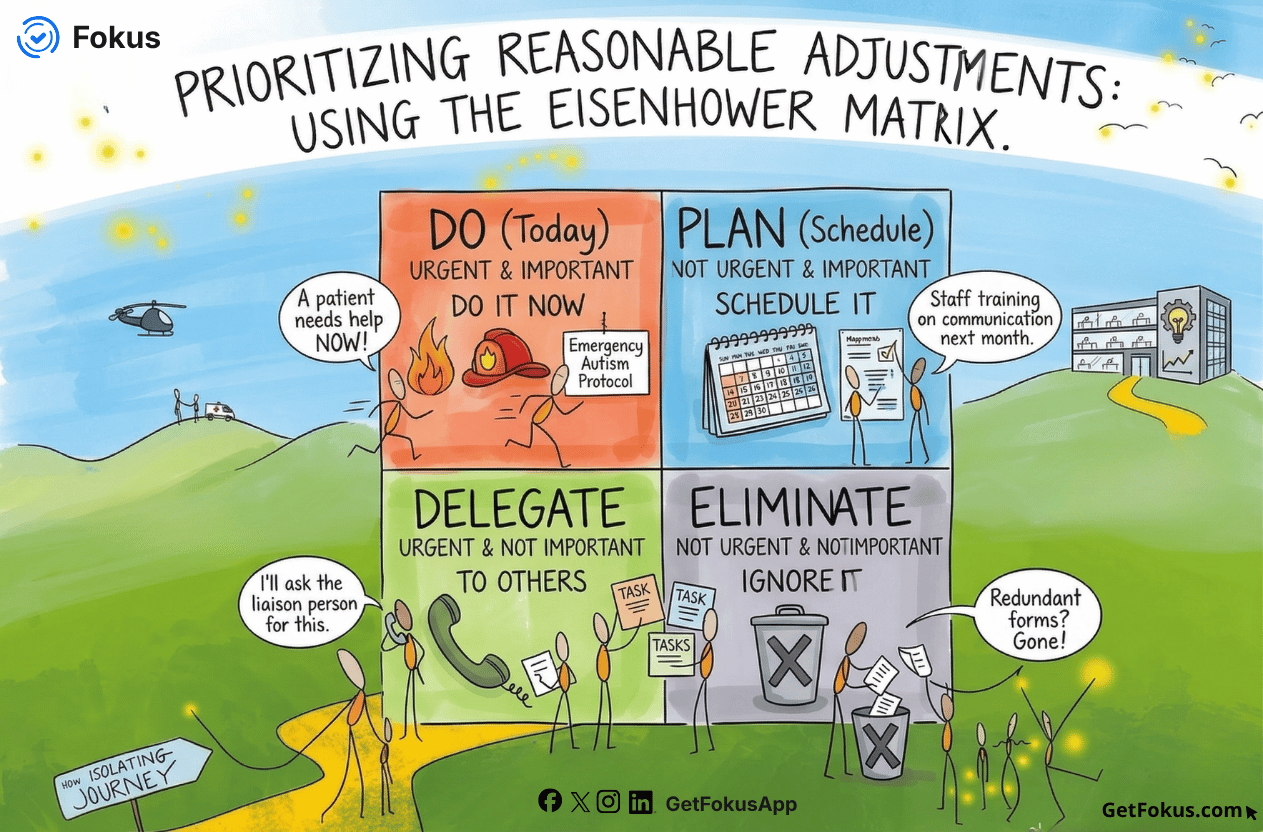
1. The Eisenhower Matrix
The Eisenhower Matrix is built around a simple distinction: urgency is not the same thing as importance.
You sort tasks into four categories:
- Urgent and important: Do these now. They include crises, serious problems, and hard deadlines.
- Important but not urgent: Schedule these. This is where strategic progress, planning, relationship building, and long-term projects live.
- Urgent but not important: Delegate these where possible. They often include interruptions, admin tasks, and low-value requests.
- Not urgent and not important: Delete these. They are distractions, low-value busywork, or things that should not be on your list at all.
This framework is one of the best ways to answer the question, “How do I tell what is urgent versus important?” because it forces every task to be evaluated against outcomes instead of noise.
 If you want to go deeper into the model itself, see our guide to the Eisenhower Matrix.
2. Eat the Frog
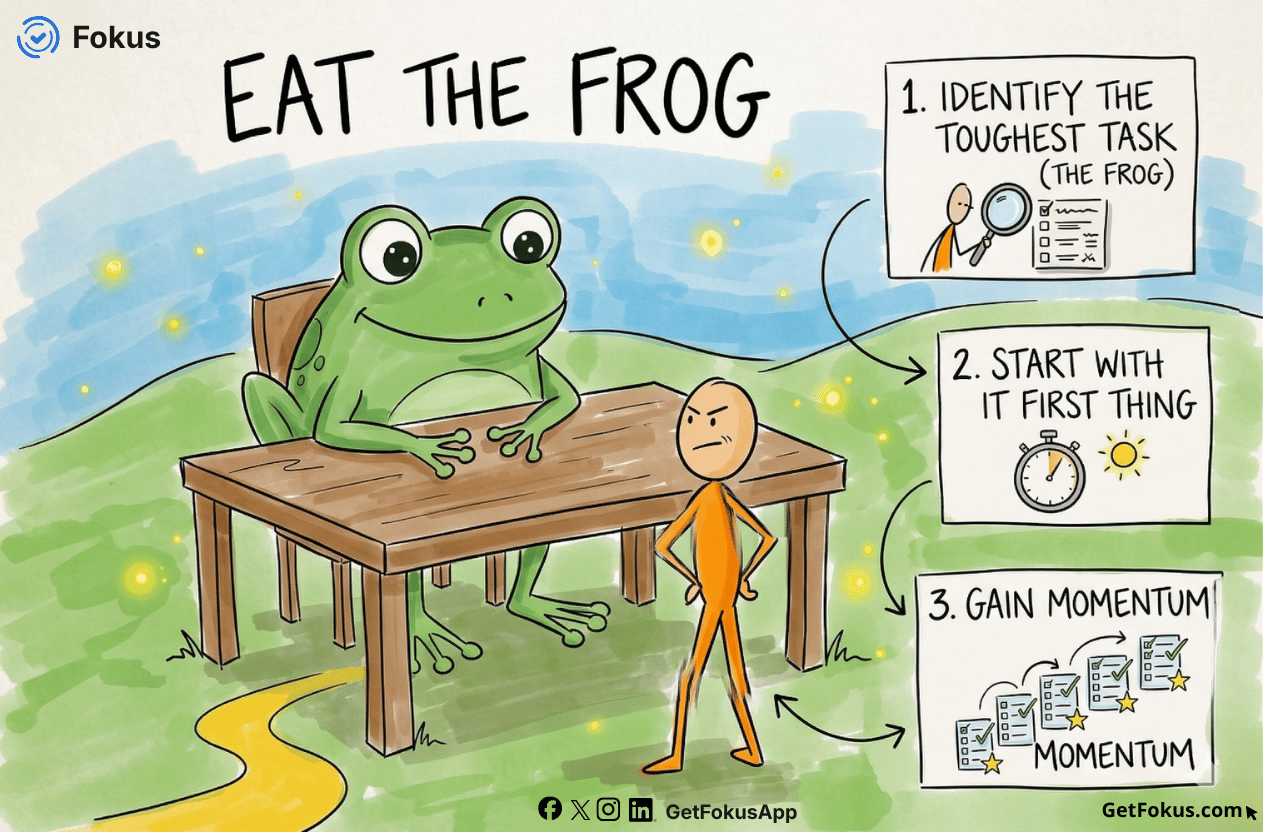
The Eat the Frog method, popularized by Brian Tracy, is ideal for people who procrastinate on meaningful work.
Your “frog” is the most important and most difficult task on your list, especially the one you are most tempted to avoid.
The rule is simple: do that task first.
By finishing the hardest, highest-value task early in the day, you build momentum and reduce the mental drag of avoidance. For many professionals, this is the fastest way to break the pattern of spending the morning on easy but low-impact work.
3. The MoSCoW Method
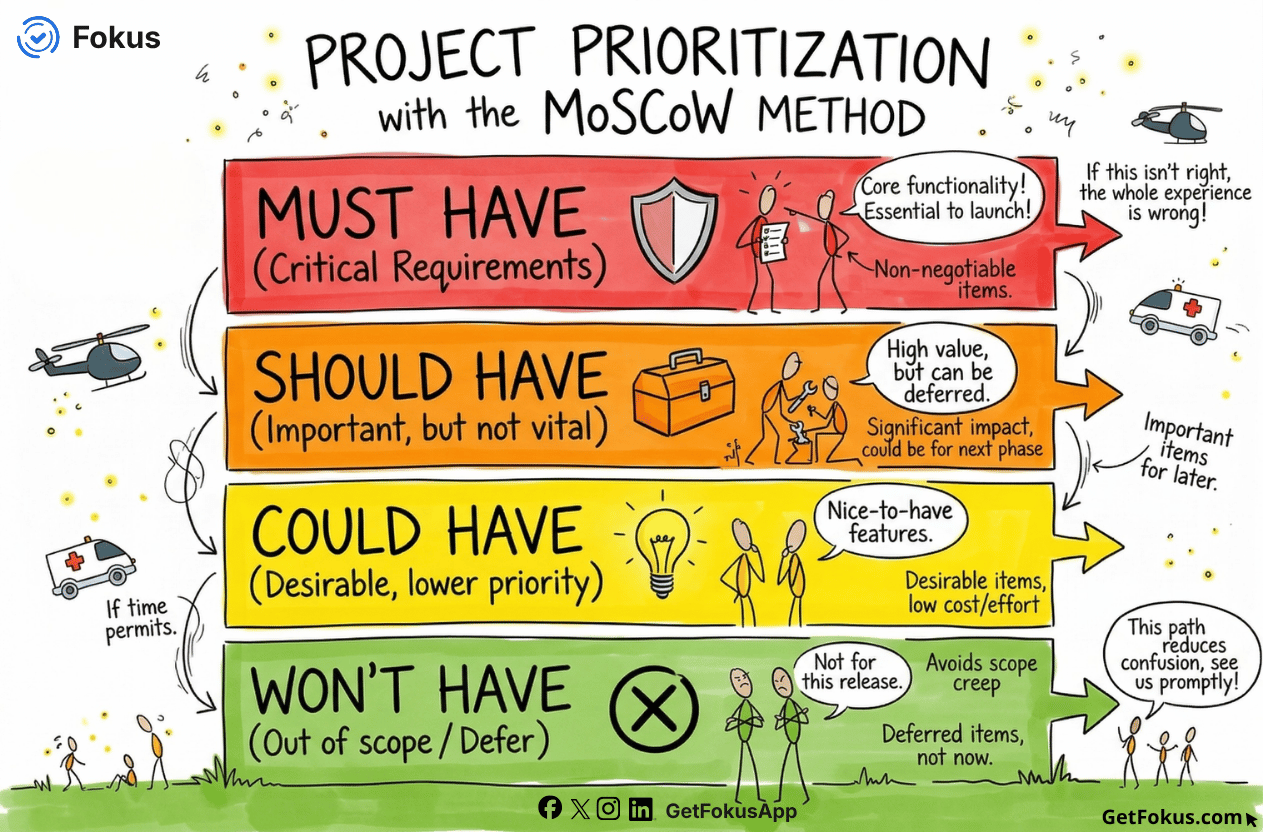
The MoSCoW Method is especially useful for project work, cross-functional teams, and competing stakeholder demands.
It classifies work into four buckets:
- Must-have: Critical items without which the project or deliverable fails.
- Should-have: Important items that matter, but are not essential to completion.
- Could-have: Nice-to-have items that add value but can wait.
- Won’t-have for now: Items that are explicitly out of scope in the current cycle.
This method is strong because it makes trade-offs explicit. It helps reduce scope creep and brings clarity when everything is being labeled as important.
4. The Ivy Lee Method
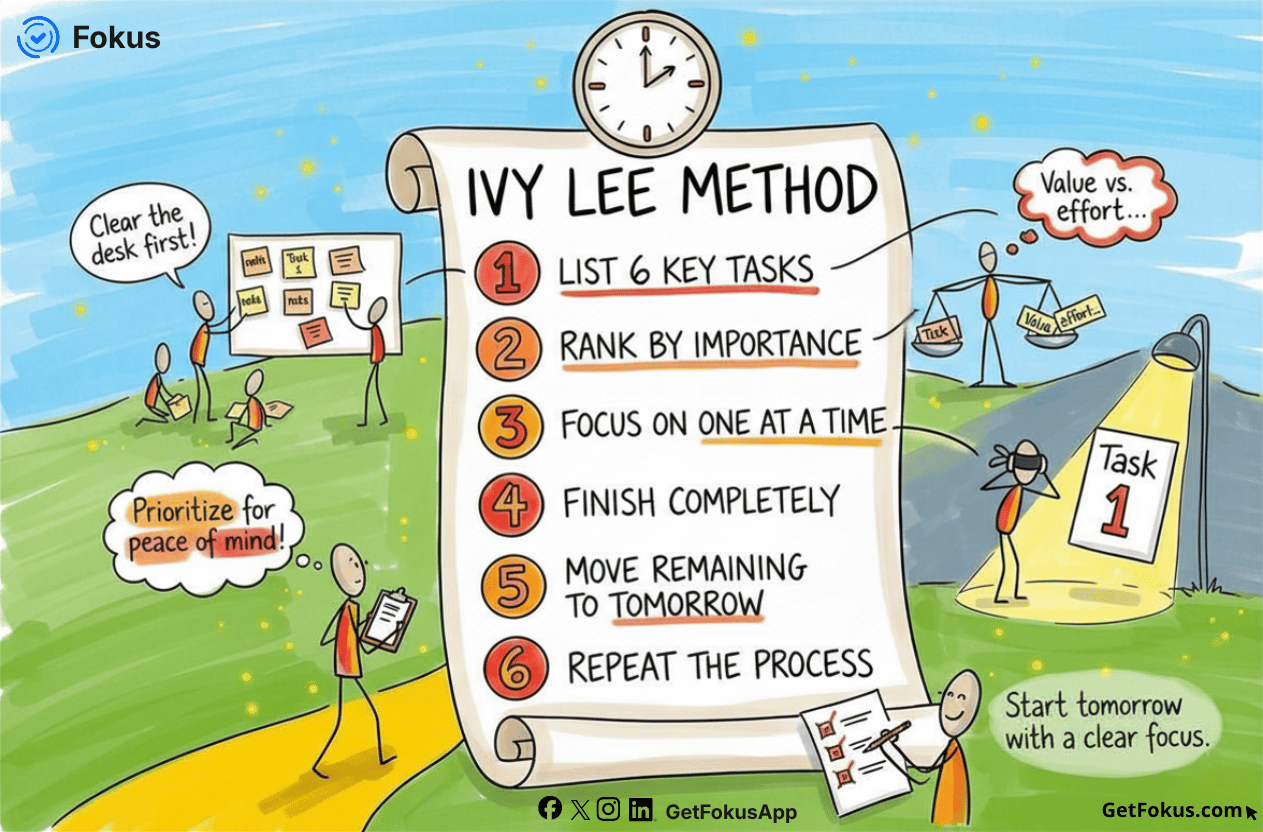
The Ivy Lee Method is one of the oldest prioritization systems still in use, and it remains effective because of how simple it is.
At the end of each workday:
- Write down the six most important tasks for tomorrow.
- Rank them in order of importance.
- Start the next day with task one and do not move on until it is finished or meaningfully advanced.
- Continue down the list in order.
- Roll unfinished items into the next day’s list.
This approach is powerful for people who feel buried by long task lists. It narrows the field and forces daily focus.
How to choose the right method for your work style
What is the best prioritization method? In practice, the answer is personal.
Here is a simple way to choose:
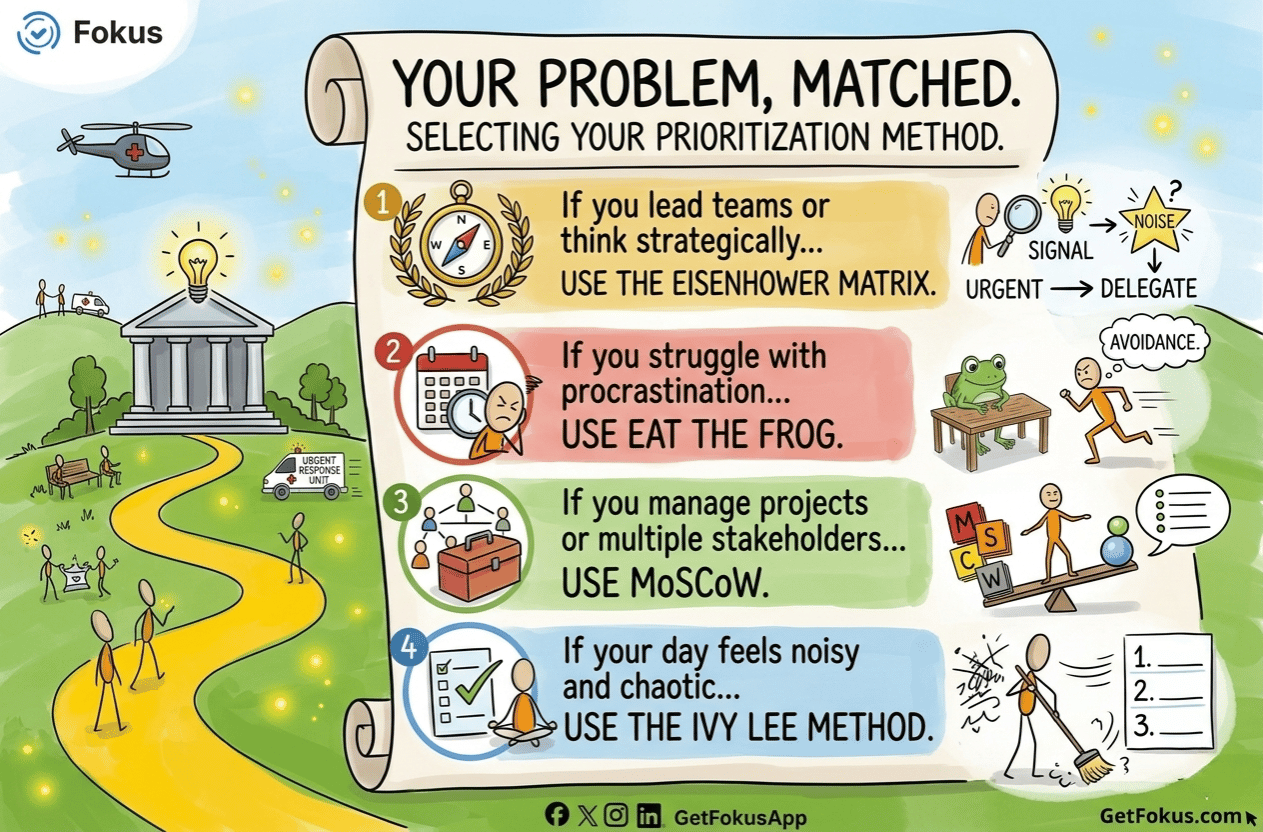
- If you think strategically or lead teams: Use the Eisenhower Matrix. It helps separate signal from noise and improves delegation.
- If you struggle with procrastination: Use Eat the Frog. It directly attacks avoidance.
- If you manage projects or multiple stakeholders: Use MoSCoW. It gives structure to competing expectations.
- If your day feels noisy and chaotic: Use the Ivy Lee Method. It creates focus with almost no complexity.
You do not need to commit to just one forever. Many people combine methods. For example, you can use the Eisenhower Matrix during weekly planning and the Ivy Lee Method during daily execution.
Where AI fits into modern prioritization
Manual methods still work. The problem is that they require consistency, judgment, and repeated effort.
That is where AI can help.
Modern AI planning tools can analyze your calendar, workload, deadlines, and goals to support intelligent task prioritization. Instead of manually re-sorting every list, you get help identifying what matters most, what is drifting behind schedule, and where work realistically fits in your day.
This is one of the reasons AI-powered daily planners like Fokus are increasingly useful. They do not replace prioritization thinking, but they reduce the mental cost of applying it consistently.
Turning prioritization into daily execution
A prioritization method is only useful if it becomes part of your day-to-day system.
Sticky notes, mental lists, and scattered reminders make that difficult. A dedicated daily planner gives your chosen framework somewhere reliable to live.
Using a tool like Fokus helps connect priorities to actual execution. Instead of only deciding what matters, you can move from decision to schedule to completion in the same workflow.
Conclusion: from busy to effective
Learning how to prioritize tasks is one of the most valuable professional skills you can build. It changes the goal from doing more to doing what matters most.
Whether you start with the Eisenhower Matrix, Eat the Frog, MoSCoW, or the Ivy Lee Method, the important thing is to choose a framework and begin using it consistently. Once you do, the chaos of the day becomes far easier to navigate.
Choose one method this week. Test it in real work. Then refine from there. The shift from overwhelmed to effective starts with one better decision about what to do next.

Lina Hayek
Productivity & Workflow Writer
Lina writes about time management, deep work, and building sustainable routines. She has helped thousands of professionals rethink their relationship with productivity.